
Cartridge vs Component Mechanical Seals: Which One Should You Buy?
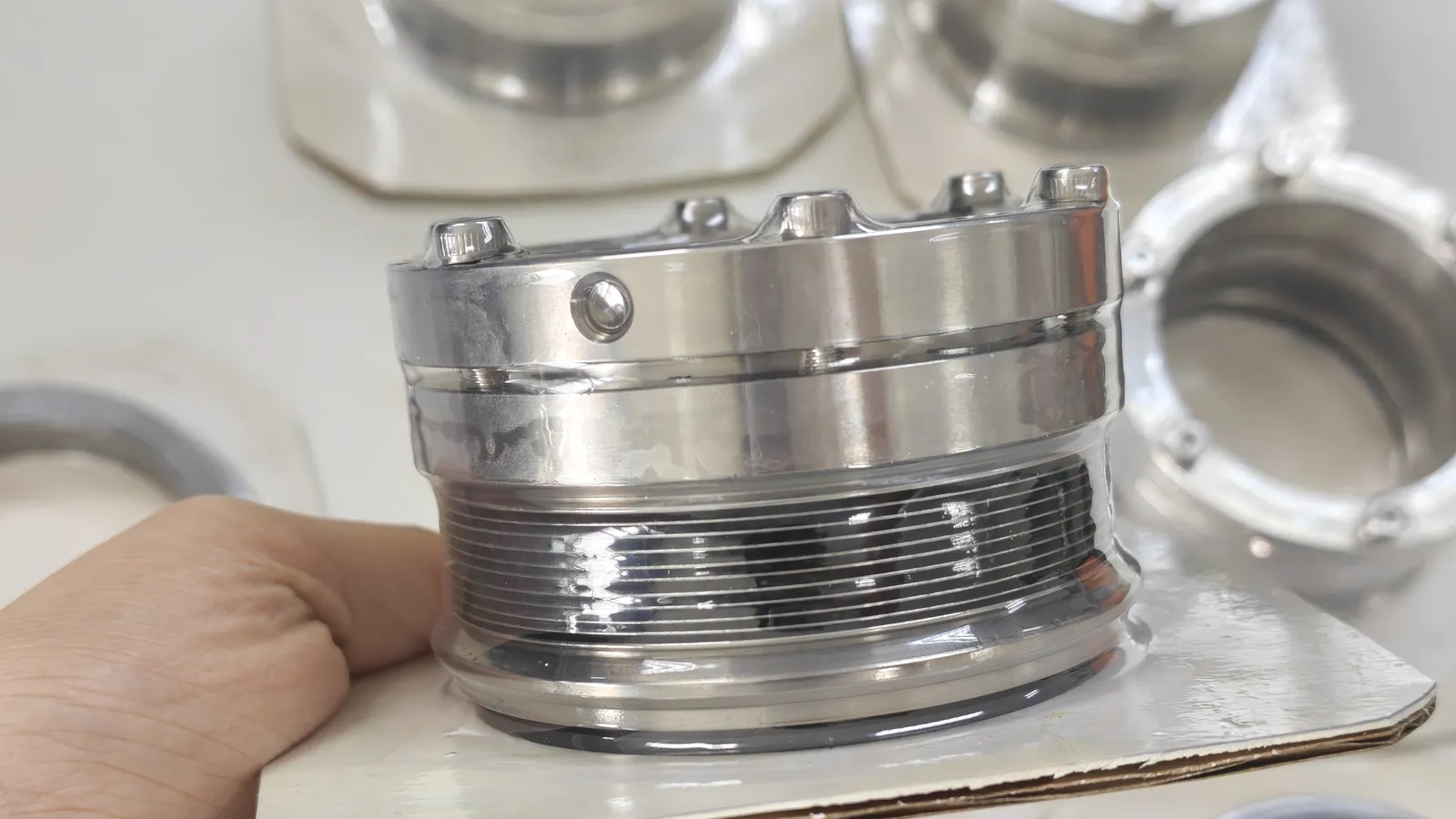
Table of Contents
The Basic Difference
A component mechanical seal arrives as a box of parts: a rotating face assembly, a stationary face, springs, a gland plate and elastomers. The fitter assembles and sets everything on the pump. A cartridge mechanical seal arrives as one complete, pre-assembled unit — faces, springs, gland, sleeve and set screws are already mounted and set at the factory. The installer's job is to slide it on, bolt it down and start the pump.
That single difference — who does the critical setting, your fitter or the factory — drives every other comparison in this article. Component seals are cheaper to buy. Cartridge seals are cheaper to own, in the situations where installation errors and downtime are expensive. Which one is right for you depends on your pumps, your people and your process.
Cost Comparison: Unit Price vs Total Cost
On the invoice, a cartridge seal typically costs 30-60% more than the equivalent component seal. The extra money buys pre-setting, a built-in gland and sleeve, and factory QC. Whether that premium is worth it depends entirely on what happens after the seal arrives.
A component seal installation takes a skilled fitter two to four hours, including measuring spring compression, aligning faces and checking squareness. A cartridge installation takes a general mechanic 30 to 60 minutes. If your labor rate is $50/hour, that is a $50-150 difference per installation — before counting the cost of a mis-installed seal that fails in weeks instead of years.
The real kicker is downtime. On a critical pump, one hour of lost production can cost more than the seal itself. A cartridge seal that saves three hours of installation time on a $1,000/hour process has already paid for its premium. This is why cartridge seals dominate in chemical plants, refineries and water treatment — the processes where downtime is expensive.
Installation Skills Required
Component seals demand a trained seal installer. The critical settings — spring compression, face squareness, gland alignment — are done by hand, and every one of them is a common failure point. Studies of premature seal failures consistently put installation error among the top causes, alongside selection error and pump-side problems like runout and cavitation.
Cartridge seals move those settings to the factory, where they can be done with fixtures and measured properly. The installer still needs to prepare the shaft, protect the faces, and torque the gland bolts correctly — but the high-skill, high-error steps are already done. For plants with mixed maintenance skill levels, or where the seal expert has retired and not been replaced, cartridge seals are the reliability equalizer.
Downtime Impact
On a standard centrifugal pump with good access, the time difference between component and cartridge installation is roughly two to three hours. On a hard-to-access pump — a vertical turbine, a large bore pump, a pump in a confined space — the difference grows, because the fitter cannot work as efficiently and every mistake is harder to fix.
There is also a less obvious downtime factor: spare parts strategy. A component seal in stock is a box of parts that can be assembled for any pump of that size. A cartridge seal in stock is pump-specific. Plants running many pumps of the same model can stock cartridge seals and cut every future repair by hours; plants with a mixed fleet may prefer component seals for flexibility.
Reliability and Failure Rates
It is worth being honest here: a properly installed component seal is just as reliable as a cartridge seal. The seal itself — faces, springs, materials — is not fundamentally different. The reliability gap comes from installation consistency. A cartridge seal eliminates the human-error variable; a component seal puts it back in the hands of your fitter.
So the question is not "which seal is more reliable" but "how consistently are your seals installed?" If your team has a documented procedure, calibrated tools and consistent results, component seals serve you well. If seal failures cluster around installation, or you cannot trace why some seals last years and others weeks, cartridge seals remove a whole class of variables — and make the remaining failures easier to diagnose.
When to Choose Each
Choose component seals when: the pump is easy to access, your maintenance team has a strong seal-installation record, you run a mixed fleet and want parts flexibility, the pump is non-critical, or budget constraints are tight across many pumps.
Choose cartridge seals when: the pump is critical or hard to access, installer skill varies, you run many pumps of the same model (stocking becomes efficient), you want faster turnarounds, or you are converting from a recurring-failure pattern. Many plants adopt a hybrid: cartridge for critical and hard-to-access pumps, component for the easy, non-critical majority.
How to Convert from Component to Cartridge
Switching a pump from a component seal to a cartridge seal is usually straightforward, because cartridge seals are designed to fit the same standard seal chambers (API 610 / ISO 3069 bores). You confirm the shaft diameter and bore, choose the cartridge configuration, and install it as a unit. No pump modification is normally needed.
The conversion does change your spares strategy. Component seal parts are interchangeable across pumps of the same size; a cartridge seal is specific to the pump model you bought it for. Before converting your whole fleet, convert one critical pump, run it for a few months, and measure the actual installation time and failure rate against your component-seal baseline. Let the data decide how far to roll it out.
What to Ask Your Supplier
Whichever configuration you choose, a serious supplier should answer these questions before you order: Will you confirm the fit against my pump model or my shaft and bore measurements? What face and elastomer materials do you recommend for my media, and why? What is the lead time, and what is the MOQ? What installation documentation do you provide? And — the question that separates honest suppliers — what are the limitations of this seal for my duty?
A supplier who confirms the fit before shipping, recommends materials by compatibility rather than price, and is candid about limits is worth more than one who simply sends the cheapest option. Mechanical seals are wear parts; the value is in getting the right one the first time.
Quick Decision Table
| Factor | Component Seal | Cartridge Seal |
|---|---|---|
| Unit price | Lower (baseline) | +30-60% typical |
| Installation time | 2-4 hours, skilled fitter | 30-60 minutes, general mechanic |
| Critical settings | Done in the field | Done at the factory |
| Installation skill needed | High | Moderate |
| Error sensitivity | High (5+ field variables) | Low |
| Spare parts flexibility | High (parts fit multiple pumps) | Pump-specific |
| Best for | Easy-access, non-critical, expert teams | Critical/hard-access pumps, varied skill, repeated failures |
Not sure which configuration fits your pump? Send us your pump model and duty details — we will recommend honestly, including when a component seal is the smarter buy. We confirm the fit before you order.
NEXT STEP
Ready to Upgrade to Mechanical Seal Solutions?
Send us your requirements — our team responds within 24 hours with pricing and lead time.
Written by
Ray ChanMechanical Seal Buyer's Guide Author · Mechanical Seal Solutions Specialist. Ray helps global importers and integrators source factory-direct mechanical seals.