
Mechanical Seal vs Gland Packing: Which Sealing Method for Your Pump?
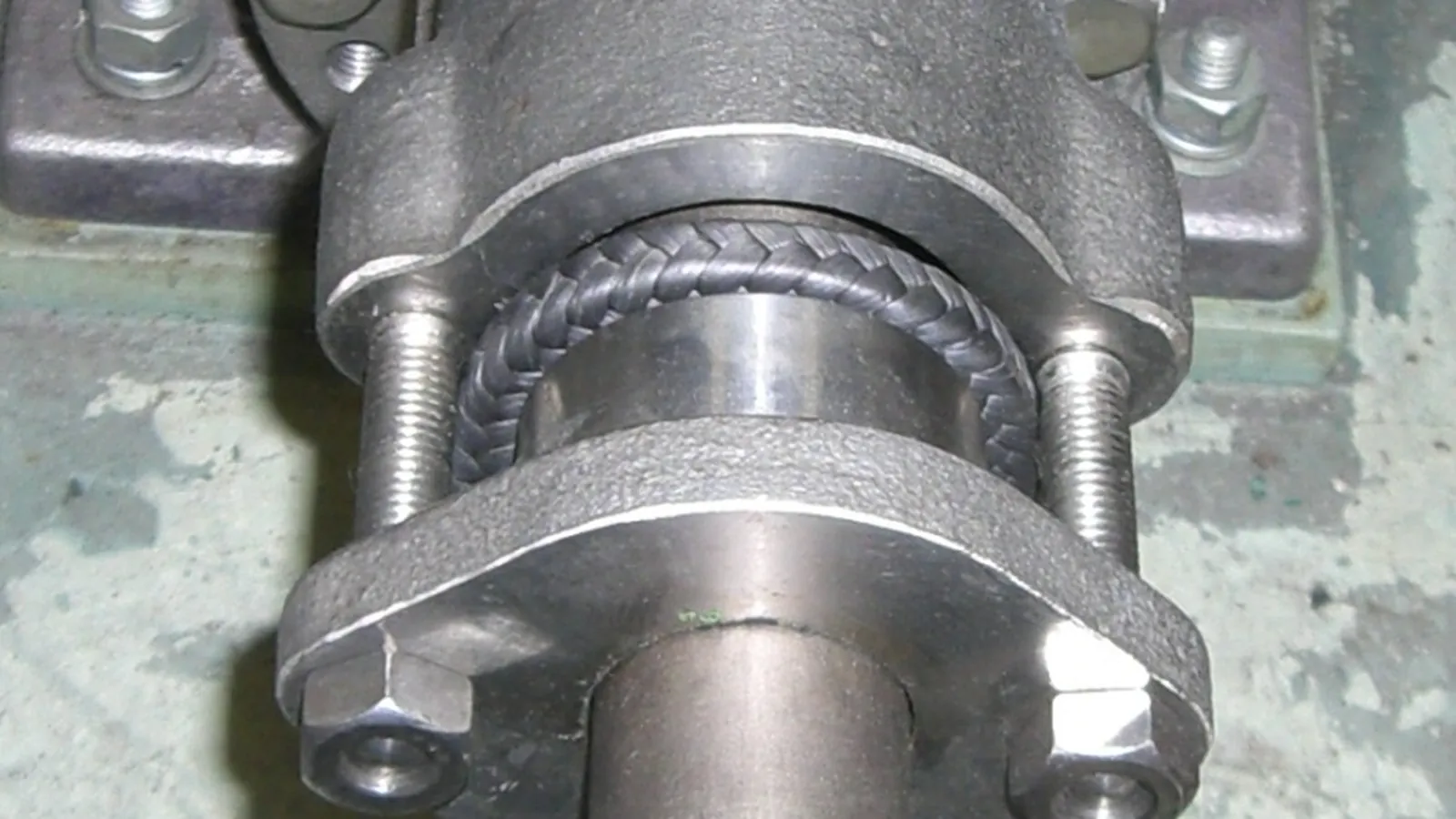
Table of Contents
The Basic Difference
A mechanical seal seals the pump at the interface between two precision-lapped faces — one rotating with the shaft, one stationary in the gland — pressed together by springs and hydraulic pressure. The gap between the faces is measured in microns, and a thin film of the pumped liquid lubricates and cools that interface while the pump runs. It is a hard-face sealing method, and it is the default choice for most modern centrifugal pumps.
Gland packing takes the opposite approach. Instead of two hard faces, it uses rings of braided fiber — PTFE, graphite, aramid or carbon yarn, often pre-lubricated — compressed around the shaft by a gland follower. The packing squeezes radially against the shaft sleeve and the stuffing box bore, and that radial compression is what resists the liquid trying to escape along the shaft. It is a soft, compressive sealing method with a history going back well over a century.
Both methods are still in widespread use, and neither is obsolete. Packing remains the right answer in some services; mechanical seals dominate in others. The practical question is not which method is "better" in the abstract, but which one fits your pump, your media and your maintenance team.
Leakage and Efficiency
The most important difference between the two methods is leakage, and it is worth being precise about it. A mechanical seal is designed to leak only a trace amount — often measured in drops per hour, and in volatile or gas services the leakage may be entirely in vapor phase. That is not the same as zero leakage. No practical shaft seal is truly leak-free; the honest claim for a mechanical seal is minimal, controlled leakage.
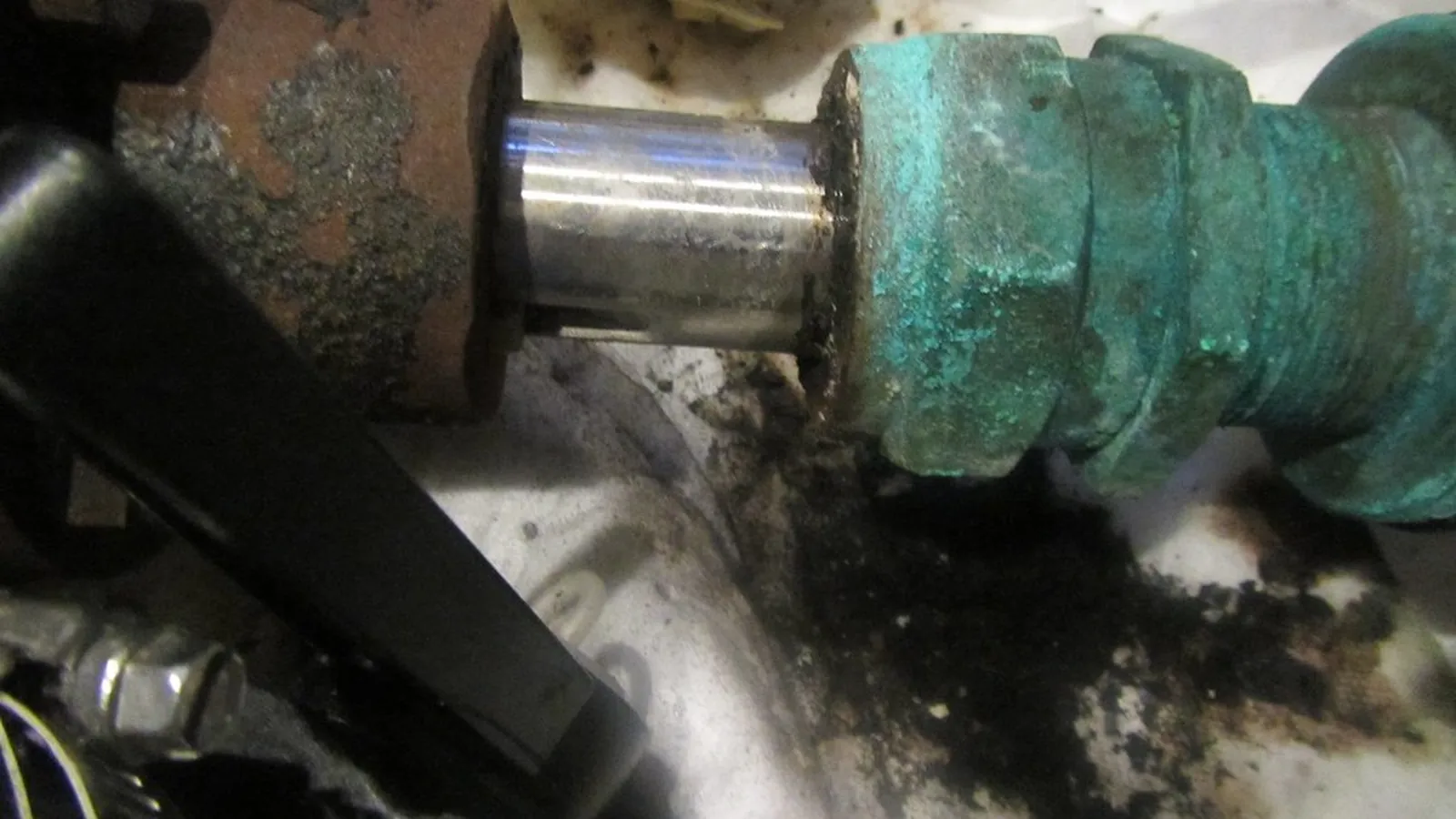
Gland packing works on a different principle: it needs to leak. The packing rings rely on a small, controlled drip of liquid to lubricate the interface between the packing and the shaft sleeve. A typical target is roughly 10-60 drops per minute, although the exact figure depends on shaft speed, pressure and media. If a gland is tightened until the drip stops completely, the packing can run dry, overheat and score the sleeve — which turns a minor leak into a shaft repair.
There is an efficiency angle as well. Packing drags against the shaft sleeve, so it consumes measurable friction power, and the tighter the gland, the higher the drag. A mechanical seal runs on a much thinner film, so its friction loss is typically lower. On a large pump the difference is small in percentage terms but real in kilowatts — and the larger hidden cost of packing usually shows up as sleeve wear over time.
Installation and Maintenance
A mechanical seal is a precision component installed once. The faces must be clean, the shaft and seal chamber properly prepared, and the gland bolts torqued evenly. Installation demands a trained fitter, but when it is done right the seal should run for years without attention. If it fails, the usual remedy is replacement rather than repair — there is little to adjust on a mechanical seal in service.
Packing is the mirror image: forgiving to install, but demanding to maintain. The gland can be adjusted while the pump runs — a careful operator can ease off or tighten the bolts to control the drip rate — and rings can be added or replaced without pulling the pump apart. The trade-off is that packing needs regular attention: monitoring, tightening and periodic re-packing, with intervals that can be as short as weeks in aggressive service.
The practical question for a plant is which kind of attention it can afford. A mechanical seal concentrates skill into a single installation event; packing spreads lower-skill work across the life of the pump. Plants with strong seal fitters tend to prefer mechanical seals; plants with small crews and simple services sometimes find packing easier to live with day to day.
Cost Comparison
On the invoice, packing wins every time. A set of packing rings costs a small fraction of a mechanical seal for the same shaft size, which is why packing survives in budget-driven maintenance regimes and on pumps where a leak is cheap to tolerate. But the purchase price is only the first line of the comparison.
The full cost picture is different. Packing consumes product — that controlled drip is leakage you are paying for, and on expensive, hot or hazardous media it adds up quickly. It also consumes labor: gland adjustment and re-packing are recurring tasks, and a neglected stuffing box can wear the sleeve, adding a repair that easily exceeds the price of a mechanical seal. A mechanical seal costs more upfront but typically runs longer between interventions — in moderate, clean service, many industrial seals give one to three years or more of service, and often longer on stable duties.
The honest summary: for clean liquids on reasonably sized pumps, the total cost of a mechanical seal over its working life is usually lower than the running cost of packing. For low-speed, low-pressure, abrasive or intermittent services, packing can still be the cheaper choice. Work the numbers for your own duty — pump size, media value, labor rate and the cost of downtime — rather than assuming either method is universally cheaper.
When to Use Each
Choose gland packing when the service plays to its strengths: low shaft speeds, low to moderate pressures, and media where a small, controlled leak is acceptable — for example clean or dirty water on simple transfer duties. Packing is also the pragmatic choice on older pumps with worn shafts or high run-out, where a mechanical seal cannot seat reliably, and in emergency situations where the pump must return to service quickly with parts that are already on the shelf.
Choose a mechanical seal when leakage matters: hazardous, toxic, volatile or valuable media; high pressures or high shaft speeds; environmental or hygiene requirements; and any duty where a drip per second would be a problem. In refinery and chemical service, mechanical seals are effectively the standard, often specified under API 682, and double seals with a barrier fluid are used where even minimal leakage is unacceptable.
In practice, many plants run a hybrid: mechanical seals on critical, high-value or hazardous pumps, and packing on the simple, low-speed, non-critical majority. There is no rule that a plant must standardize on one method for everything — the two technologies coexist for good reasons.
Life and Reliability
Packing life is short by design. In abrasive or hot services, a set of rings can be worn out or baked hard in a matter of weeks; in gentle, cool water service, well-maintained packing can last months. The decisive variable is attentive adjustment — a gland that runs dry, or runs too tight, fails quickly, and a plant that cannot dedicate that attention will see short packing life.
Mechanical seal life is a range, not a promise. In moderate, clean service, one to three years is a realistic expectation, and seals on stable duties often run considerably longer. In aggressive conditions — abrasive media, cavitation, frequent dry-running or operation far from the pump's best efficiency point — a seal can fail in weeks. The most common causes of premature failure are not the seal itself: installation damage, running dry, cavitation, piping strain and poor pump condition account for a large share of early failures.
Neither method is "fit and forget". Packing needs regular attention; a mechanical seal needs correct installation and a healthy pump around it. A pump with bearing wear, shaft deflection or excessive vibration will punish both methods equally.
Side-by-Side Comparison Table
The table below summarizes the typical differences. Treat the figures as starting points for your own duty — exact values vary with pump size, speed, pressure and media.
| Factor | Mechanical Seal | Gland Packing |
|---|---|---|
| Leakage | Minimal — drops per hour or vapor phase | Controlled drip, often 10-60 drops per minute |
| Installation | Precision one-time install, trained fitter | Simple and forgiving, no special tools |
| Maintenance | None during normal run; replace on failure | Periodic tightening and re-packing |
| Initial cost | Higher | Low |
| Running cost | Low friction, low product loss | Product leakage, sleeve wear and labor |
| Media suitability | Clean to moderately dirty liquids, hazardous and high-pressure duties | Low-pressure water, slurries, emergency service |
| Shaft speed | Suitable for high speeds | Best at low speeds |
| Typical service life | 1-3+ years in moderate service | Weeks to months, service dependent |
How to Decide
Work through a short checklist before choosing. What are you pumping — a clean liquid, a slurry, something hazardous or valuable? How fast and how hard is the duty — shaft speed, pressure, temperature? What is the pump's condition — shaft run-out, sleeve wear, stuffing box dimensions? What can your maintenance crew actually sustain — trained seal fitters, or general mechanics between other jobs? And what does an hour of downtime cost you?
Then compare totals, not ticket prices: leakage cost, labor, spares and downtime over the expected life of the component. If the numbers come out close, the tie-breaker is usually the plant's maintenance capability — choose the method your team can genuinely sustain, because a well-maintained packing gland often outperforms a neglected mechanical seal, and the reverse is equally true.
If you are converting a pump from packing to a mechanical seal, the job is usually straightforward when the seal chamber and shaft sleeve are standard sizes — but check the sleeve condition and confirm the exact chamber dimensions first. Whenever you are unsure, ask the supplier to confirm the fit against your pump model and to recommend materials for your specific media. A serious supplier will also tell you when packing is the better call for your duty.
FAQ
Can I convert a pump from gland packing to a mechanical seal?
In most cases, yes, provided the stuffing box and shaft sleeve are in good condition and the chamber matches a standard mechanical seal bore. You will usually need a new or sleeved shaft surface for the seal to run on. Confirm the conversion against your pump model and your shaft and bore measurements with your supplier before ordering.
How much leakage is normal for gland packing?
A common target is roughly 10-60 drops per minute, but the right figure depends on pressure, speed and media. The goal is to keep the gland cool and wet without flooding. Check the pump manual and adjust accordingly — a gland that runs completely dry will overheat and damage the sleeve.
Do mechanical seals leak?
Mechanical seals are designed for minimal leakage — drops per hour or less, sometimes vapor only — but they are not truly leak-free. A steady, visible leak usually means a problem: wrong materials, installation damage, or the pump running outside its design range.
Is gland packing cheaper than a mechanical seal?
The initial cost is much lower. Over the life of the pump, packing usually costs more in leakage, labor and sleeve wear — but on low-speed, low-pressure or abrasive services it can still be the more economical choice. Calculate the total cost for your own duty before deciding.
When should I use a double mechanical seal instead of packing?
When the media is hazardous, toxic or flammable, even the minimal leakage of a single seal is too much. A double or tandem seal with a barrier fluid contains the product and is the standard answer for such duties. Packing is generally not recommended for hazardous media — confirm your approach with your supplier.
Need help matching the right seal? Contact us with your pump model — we confirm the fit before you order.
NEXT STEP
Ready to Upgrade to Mechanical Seal Solutions?
Send us your requirements — our team responds within 24 hours with pricing and lead time.
Written by
Ray ChanMechanical Seal Buyer's Guide Author · Mechanical Seal Solutions Specialist. Ray helps global importers and integrators source factory-direct mechanical seals.