
Pump Mechanical Seals: The Complete Guide
Table of Contents
How a Mechanical Seal Works
A mechanical seal prevents the pumped medium from escaping where the pump shaft passes through the casing. Two flat faces — one rotating with the shaft (the rotating face) and one fixed to the casing (the stationary face) — are pressed together by spring and hydraulic forces. A microscopic film of the pumped liquid separates them, providing both sealing and lubrication. When that film is lost (dry running, cavitation), the faces overheat and fail quickly.
The film between the faces is typically only a few microns thick, yet it is the most important dimension in the whole pump. Spring force and hydraulic pressure push the faces together; the liquid film pushes them apart. When the pump runs normally, these forces balance and the faces never touch. Lose the film — through dry running, cavitation or vaporization at the faces — and the faces rub against each other at shaft speed. Surface temperatures can spike in seconds, and the faces crack or score beyond repair.
A complete seal is more than two faces. The main components are:
- Rotating face assembly — the hard face driven by the shaft
- Stationary face — mounted in the gland or the housing
- Springs — keep the faces in contact when the pump is stopped
- Elastomers — static seals between the seal and the shaft or housing
- Gland plate — holds the stationary parts and bolts to the casing
- Sleeve and set screws (cartridge designs) — keep everything pre-aligned
Because the faces wear by design, a mechanical seal is a service part, not a lifetime component. In clean water service a well-selected, well-installed seal commonly lasts two to five years; in abrasive or aggressive duty it may be six to eighteen months. Anyone who promises a seal that never needs replacement is not selling you a mechanical seal.
Before mechanical seals became standard, pumps used gland packing — braided soft material squeezed around the shaft. Packing still has a place on simple, low-speed, low-pressure pumps, and many plants run it happily for years. The reasons most pumps moved to mechanical seals are honest: lower leakage, less shaft wear, less daily adjustment, and better tolerance of speed and pressure. Neither technology is wrong — the choice is duty and maintenance capacity. If your plant is standardized on mechanical seals, the rest of this guide applies directly; if you are converting from packing, check the seal chamber dimensions first, because packing and mechanical seals need different chamber shapes.
The Four Selection Numbers
Every seal selection starts with four numbers: shaft diameter, seal bore (the chamber opening), operating pressure and operating temperature. Add your media and you have everything needed to match a configuration, face material and elastomer. If you only know your pump model, a supplier with cross-reference data can fill in the numbers for you.
Shaft diameter is measured in millimetres at the point where the seal rides — not the motor shaft and not the coupling end. Seal bore is the diameter of the chamber opening the seal sits in; together with the gland bolt pattern it defines the physical envelope. Operating pressure means the pressure at the seal chamber, which is often different from pump discharge pressure. Operating temperature means the temperature of the fluid at the seal, not the storage tank.
Why these four? Shaft and bore decide physical size — a seal that does not fit is not a seal. Pressure and temperature decide the design: high pressure may require a balanced seal, and high temperature changes elastomer and face choices. Media then decides materials. Get the numbers right and the rest of the selection is routine; get one wrong and the seal fails regardless of how good the materials are.
If you only know your pump model, that is normally enough to start. A supplier with cross-reference data can pull the shaft size and bore from the pump datasheet, then ask you for pressure, temperature and media. Do not guess these numbers — an error of a few millimetres or a few bar can mean a seal that leaks on day one.
To give you a sense of scale: common pump shaft diameters run from about 10 mm on small dosing pumps to 100 mm or more on large process pumps, and seal bores track the gland standard of the pump family. Pressures at the seal chamber typically sit between a few bar on clean-water duties and 20-40 bar on boiler-feed and high-pressure process pumps, with special designs going higher. Temperatures span below freezing to 150-200°C before elastomer limits force a design change. These ranges are context, not specification — confirm the actual numbers for your pump.
Seal Configurations
Single seals are the workhorse for clean duties. Double seals add a barrier-fluid stage for hazardous or abrasive media. Cartridge seals arrive pre-assembled and install without measuring. Split seals install in halves without dismantling the pump. The right configuration depends on your media, duty and downtime costs — not on what is cheapest to buy.
Single seals handle the large majority of pumps — clean water, cooling systems, most chemicals at moderate duty. They are the simplest to install and the cheapest to stock. Their weakness is honest: they rely on the pumped fluid for lubrication and cooling, so they need a stable liquid film at the faces. Keep the film intact and a single seal is a reliable, low-cost solution.
Double and tandem seals add a second set of faces with a barrier or buffer fluid between them. Use them when the pumped media is hazardous, abrasive, crystallizing or prone to vaporizing at the faces — or when a leak to atmosphere cannot be tolerated. They cost more, need a barrier-fluid system, and demand more maintenance attention, but they are the right answer for the duties where a single seal is a risk.
Cartridge seals arrive pre-assembled and pre-set: slide on, bolt down, run. They remove most installation variables and are the pragmatic choice for critical pumps. Split seals install in halves, which lets you replace a seal on a large pump without pulling the motor or the coupling — a big saving on downtime for big machines.
The right configuration depends on your media, your duty and what an hour of downtime costs — not on what is cheapest to buy. A cheap seal on a critical pump is the most expensive option in the catalogue.
Double seals come in two common arrangements, and the difference matters when you buy. In a back-to-back arrangement, the barrier fluid pressure is higher than the pumped pressure, which pushes the inner faces together — the usual choice for most barrier systems. In a tandem arrangement, both seals face the same way and the outer seal acts as a backup; it suits duties where a controlled leak to a drain is acceptable. Face-to-face is less common, mostly in compact designs. You do not need to choose this yourself — the supplier selects the arrangement from your duty and safety requirements — but knowing the terms helps when you compare quotes.
Face and Elastomer Materials
Faces: SiC/SiC for water and most chemicals; SiC/TC where abrasives are present; ceramic/carbon for clean, light duty. Elastomers: EPDM for water and mild chemicals, FKM (Viton) for oils and aggressive chemicals, NBR for general petroleum service, PTFE for the most aggressive media. Material choice is a compatibility decision, not a price decision.
On the face side, SiC/SiC is the modern default — hard, corrosion-resistant and low-friction against itself. SiC/TC adds toughness where fine abrasives are present. Ceramic/carbon is the traditional, inexpensive pair for clean light duty, and TC/carbon remains the classic for slurry and thermal-shock service. Each pair has a real operating window; the trick is matching the window to your pump.
Elastomers are the static seals between the seal and the shaft or housing — and in practice they are the most common material failure point. The table below is a starting map for common media. Concentrations and temperatures change the answer, so confirm the final grade with your supplier.
| Elastomer | Typical media | Typical temperature range |
|---|---|---|
| NBR | Mineral oils, water, general petroleum service | -30°C to +100°C |
| EPDM | Water, steam, mild chemicals | -40°C to +150°C |
| FKM | Oils, fuels, aggressive chemicals | -20°C to +200°C |
| PTFE / FFKM | Most aggressive chemicals | -40°C to +180°C (grade-dependent) |
Temperature ranges depend on formulation and media — treat the table as a planning tool and confirm the exact grade with your supplier. A cheap elastomer that swells or hardens in your solvent costs far more than the price difference on the invoice.
One more material note: face pairs and elastomers are selected together, not independently. A chemically perfect face pair with a swollen elastomer leaks; a perfect elastomer with the wrong face pair wears out. When you send a duty to a supplier, they will usually return one combined recommendation — configuration, face pair, elastomer — because the three only work as a set. That is why the four-numbers-plus-media starting point in this guide is enough to begin.
Common Failure Causes
The usual suspects: wrong seal selection, installation damage (scratched faces, wrong spring setting), shaft runout, cavitation, dry running and worn faces. All are diagnosable — and most are preventable. A seal that fails in weeks was almost always mis-selected or mis-installed, not defective.
Break the list down and most premature failures fall into three buckets: the wrong seal was selected, the seal was damaged during installation, or the pump itself is the problem. Industry failure studies consistently rank selection and installation errors near the top — well ahead of genuine material defects. That is good news, because every one of those causes is under your control.
- Wrong seal for the duty — pressure, temperature, media or speed outside the rating
- Face damage during installation — scratches, chips, embedded dirt
- Wrong spring setting or gland torque
- Shaft runout or coupling misalignment
- Cavitation and dry running
- Normal end-of-life wear
Every one of these is diagnosable, and most are preventable. Before you blame the part, check the pump: runout, alignment, suction conditions and operation history tell you more than the seal itself ever will.
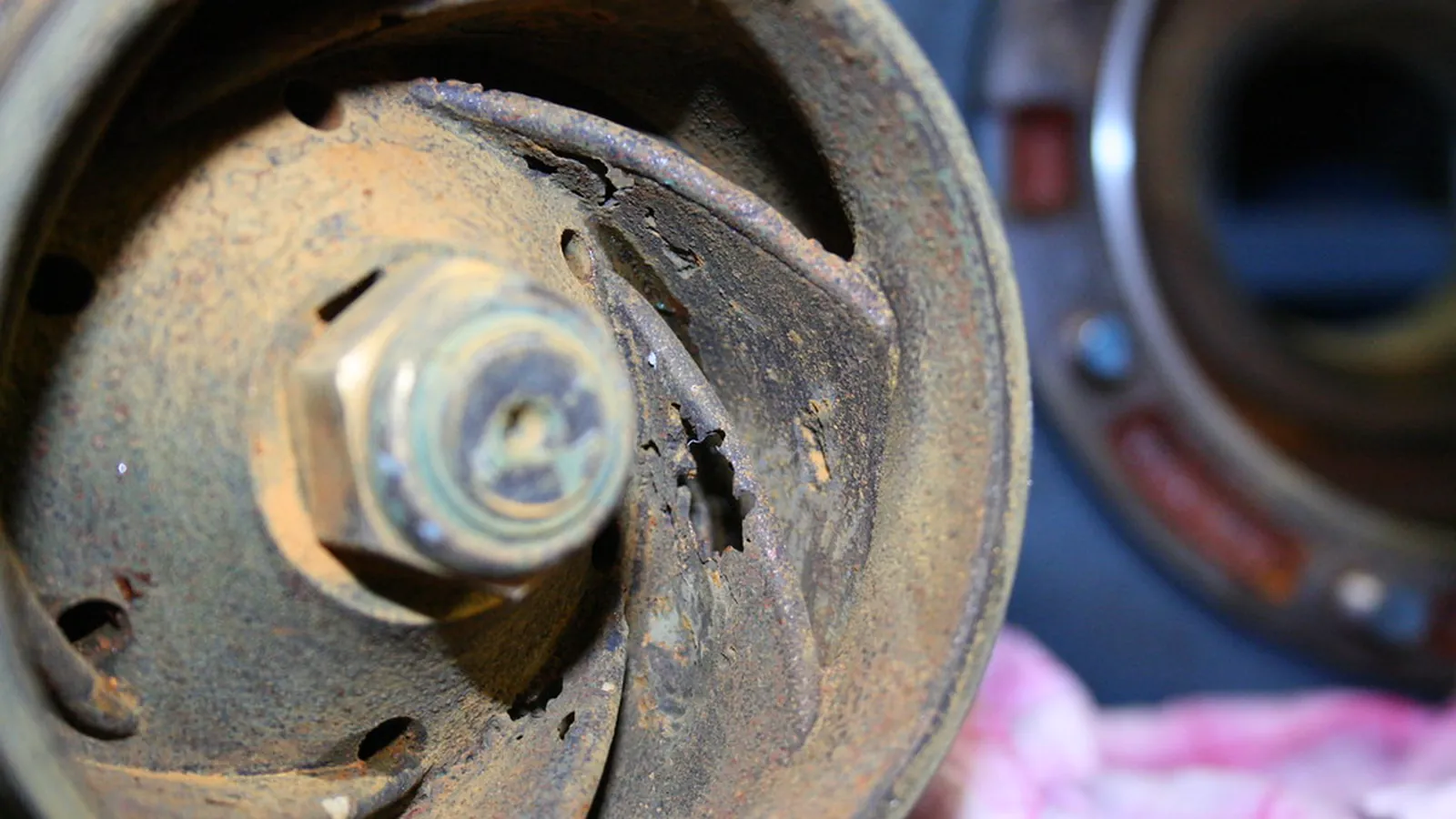
The fastest failure analysis is free: photograph the faces of the failed seal before you throw it away. Scored faces point to abrasives or dirt; heat discoloration points to dry running or over-compression; a swollen elastomer points to a compatibility problem; a clean, evenly worn face with a slow leak points to plain end-of-life. Send the photos with your next order and the supplier's diagnosis will be better than a description in words.
Balanced vs Unbalanced Seals
Balance describes how much of the hydraulic pressure pushes the faces together. In an unbalanced seal, the full chamber pressure acts over most of the face area, forcing the faces together harder as pressure rises. In a balanced seal, a stepped shaft or sleeve reduces the area the pressure acts on, so the face load stays roughly constant across the pressure range.
Why it matters: on an unbalanced seal at high pressure, face load climbs until the fluid film is squeezed out. The faces run hot, wear fast and eventually leak. A balanced seal keeps a stable film, which means longer life at high pressure and high speed. The trade-off is cost and a little more complexity in setting.
As a rough rule, unbalanced seals are fine up to about 10-15 bar in water service, depending on face materials and shaft speed. Above that — or for light hydrocarbons, hot water and high-speed pumps — balanced designs are the norm. The exact changeover point depends on your duty, so treat this as a starting point and confirm with your supplier.
| Factor | Unbalanced | Balanced |
|---|---|---|
| Typical max pressure | ~10-15 bar (duty-dependent) | 40 bar+ with proper materials |
| Face load vs pressure | Rises with pressure | Stable across the range |
| Relative cost | Lower | Higher |
| Best for | Low-to-moderate pressure water and chemical duty | High pressure, high speed, light hydrocarbons |
Spring and Bellows Designs
Springs keep the faces in contact when the pump is stopped and the hydraulic force drops away. The two families are single-spring and multi-spring. A single large spring is tolerant of dirt and clogging but exerts a less uniform face load. Multi-spring designs spread the load evenly — better for high-speed and high-pressure duty — but the small springs can clog in dirty or crystallizing media.
Bellows seals replace the dynamic elastomer on the shaft with a flexible metal or PTFE bellows that both seals and pushes the faces together. Metal bellows handle high temperatures — steam, hot oils — where elastomers fail, and they eliminate shaft fretting under the seal. PTFE bellows are the standard choice for aggressive chemicals that attack elastomers.
You do not need to memorize when each design is right — the supplier selects it from your duty. But knowing the difference helps you read a quotation and spot an obvious mismatch, like a multi-spring seal offered for a slurry pump or an elastomer seal quoted for steam duty.
Spring materials matter almost as much as the design. Standard stainless springs handle water and most chemicals; aggressive media may call for Hastelloy or other special alloys in the springs, and PTFE-covered springs are used where the media attacks metal. Springs are small, cheap parts that fail dramatically — a corroded spring snaps and the faces lose their closing force. When a seal is quoted for a corrosive duty, check that the spring material is part of the specification.
Installation Mistakes Checklist
Most seals that die young are killed during installation. Work through this checklist and you remove most of the variables that cause early failure. If your plant keeps records of seal life, run the same list every time — consistency is what improves your average.
- Measure shaft and bore before ordering — do not trust memory or an old drawing
- Unpack the seal only at the pump; keep faces protected until the moment of install
- Handle faces with clean gloves; never touch lapped faces with bare fingers
- Lubricate elastomers with the recommended lubricant — not grease unless specified
- Slide the seal over the shaft with a sleeve; never force it over a keyway
- Set spring compression exactly per the instructions; use the setting marks
- Torque gland bolts evenly, in sequence, to the specified values
- Align the coupling and check runout before the first start
If your team does not have a documented installation procedure, write one from the seal maker's instructions and this checklist, and make it part of the job sign-off. A cartridge seal removes several of these steps by design — which is exactly why many plants use them for critical pumps.
And after the first start, do not walk away. Check the gland area for weep within the first hour, re-torque the gland bolts once the pump has run, and record the install in the maintenance log. A seal that survives its first shift with a dry gland and a cool face is on track for a long life; problems that show up in the first hour are almost always fixable cheaply.
How to Extend Seal Life
Seal life is set by four things: selection, installation, pump condition and how the pump is operated — and you control all four. In clean water service a well-handled seal typically gives two to five years; in abrasive duty expect six to eighteen months. The goal is to sit at the good end of the range for your duty.
- Protect against dry running with a level switch or low-suction cut-out
- Keep the flush or quench arrangement clean and flowing
- Keep NPSH margin — cavitation kills faces faster than anything else
- Check coupling alignment and shaft runout at every overhaul
- Run the seal in properly after every installation
- Record install dates and failure reasons per pump; look for patterns
Patterns are the real maintenance tool. When one pump fails in months and its twin runs for years, the difference is almost always pump-side — alignment, suction, operation — not the seal brand. Track the data and the fix usually announces itself.
Flush plans deserve one line of their own because they are so often neglected. On many duties the seal chamber needs a continuous flush of clean, compatible liquid to cool the faces and carry abrasives away. A blocked flush line is a slow death sentence for a seal, and the first symptom is often a hot gland. If your pump has a flush connection, put it on the monthly inspection list.
Buying Checklist for Procurement
For buyers, the invoice price is the smallest part of seal cost. Total cost is price plus installation labor plus downtime plus how long the seal lasts. A seal that costs 20% more but lasts twice as long is the cheaper buy — if it is the right seal for the duty.
- Written spec: shaft, bore, media, temperature, pressure, speed, quantity
- Fit confirmation before payment — not after shipment
- Material certification for faces and elastomers on critical duties
- Spare parts availability and lead time for that specific seal
- MOQ and delivery terms for repeat orders
- Warranty terms — and what voids them
Ask the supplier to confirm the fit in writing and keep the confirmation on file. If a seal arrives and does not fit, that document decides who pays the freight — in both directions.
Stocking strategy is part of buying. For a pump that fails predictably every couple of years, holding one spare seal is cheap insurance; for a critical pump, consider holding two and rotating stock by date. Check the storage rules too — elastomers age, so seals should be stored cool, dark and dry, and the oldest stock used first. A seal that sat in a hot warehouse for three years can fail before it runs an hour.
Seal Types Comparison Table
Here is the configuration choice at a glance. Costs and times are typical ranges for standard centrifugal pumps — your duty may differ, so use the table as a shortlist, not a verdict.
| Factor | Single | Double (dual) | Cartridge | Split |
|---|---|---|---|---|
| Relative cost | Baseline | Highest (two seals + system) | +30-60% vs component | Highest in large sizes |
| Installation | Skilled fitter, set in field | Skilled fitter + barrier-fluid setup | 30-60 min, general mechanic | In halves, no coupling pull |
| Downtime for replacement | Moderate | High | Low | Lowest on large pumps |
| Best for | Clean water, moderate duty | Hazardous/abrasive/volatile media | Critical pumps, varied skill levels | Large or hard-to-access pumps |
A split seal is not automatically better than a single seal — it is a different tool for a different problem. Match the configuration to the duty, and let a supplier confirm the recommendation before you order.
How to Order the Right Seal
Send your supplier: pump brand/model, shaft diameter, bore size, media, temperature, pressure and quantity — plus a photo of the old seal if possible. A serious supplier will confirm the fit before quoting, not after shipping.
The complete information list for an accurate quote:
- Pump brand and model, and the pump serial number if available
- Shaft diameter at the seal location, and seal chamber bore
- Media, including concentration and any solids or additives
- Fluid temperature at the seal and chamber pressure
- Pump speed and coupling details if known
- Quantity and delivery target
- Photo of the old seal and its part number if legible
What a good supplier does next: checks the fit against the pump drawing, proposes a configuration and material set for your media, confirms before quoting, and keeps a record for your repeat orders. A serious supplier will confirm the fit before quoting, not after shipping.
After the order is placed, a serious supplier sends a drawing or confirmation sheet for approval before production. That document is your last chance to catch a wrong shaft size or bore — check it against your measured values, not the old seal's part number. Production, pressure testing and packing usually follow within days for standard sizes; custom materials and sizes take longer, so plan spare-stock orders ahead of need.
Need help matching the right seal? Contact us with your pump model — we confirm the fit before you order.
NEXT STEP
Ready to Upgrade to Mechanical Seal Solutions?
Send us your requirements — our team responds within 24 hours with pricing and lead time.
Written by
Ray ChanMechanical Seal Buyer's Guide Author · Mechanical Seal Solutions Specialist. Ray helps global importers and integrators source factory-direct mechanical seals.