
Seal Face Materials: SiC vs Tungsten Carbide vs Ceramic vs Carbon
Table of Contents
Why the Face Material Matters
The faces are the heart of the seal — they run against each other at high speed with only a microscopic fluid film between them. Material choice decides wear life, corrosion resistance and thermal behavior. It is the single most important material decision in a mechanical seal.
The faces do two jobs at once: they seal and they wear. Every start, stop and pressure change rubs them together, and the fluid film between them is only microns thick. The material pair decides how fast the faces wear, how they survive heat and corrosion, and how much the seal costs to buy and to replace.
The rule that saves the most money: match the pair to the media and duty, not to whatever was on the pump before. A face upgrade that doubles seal life costs a fraction of one extra downtime.
Face pairs are made to a flatness measured in light bands — the lapped surfaces are flat within a fraction of a micron across the whole face. That flatness is what allows two hard surfaces to seal against each other with only a film between them. It is also why faces must never be touched, dropped or lapped in the field: the factory finish cannot be reproduced on a bench.
The four materials in this guide cover the large majority of pumps in service. There are exotic options — diamond-coated faces, silicon nitride, advanced carbons — for extreme duties, but they are specialty items with specialty prices. Start from the common four, understand their trade-offs, and you will make the right call on the vast majority of pumps.
Silicon Carbide (SiC)
The default for water and most chemical duties. Very hard, excellent corrosion resistance, low friction against itself. SiC/SiC pairs handle most clean and mildly abrasive media well. Cost-effective and widely stocked.
SiC is hard — close to diamond on most hardness scales — and chemically resistant across a wide pH range, which is why it is the default for water and most chemical duties. It also conducts heat well, which keeps the faces cooler at speed. SiC/SiC pairs have low friction against each other and handle most clean and mildly abrasive media with long life.
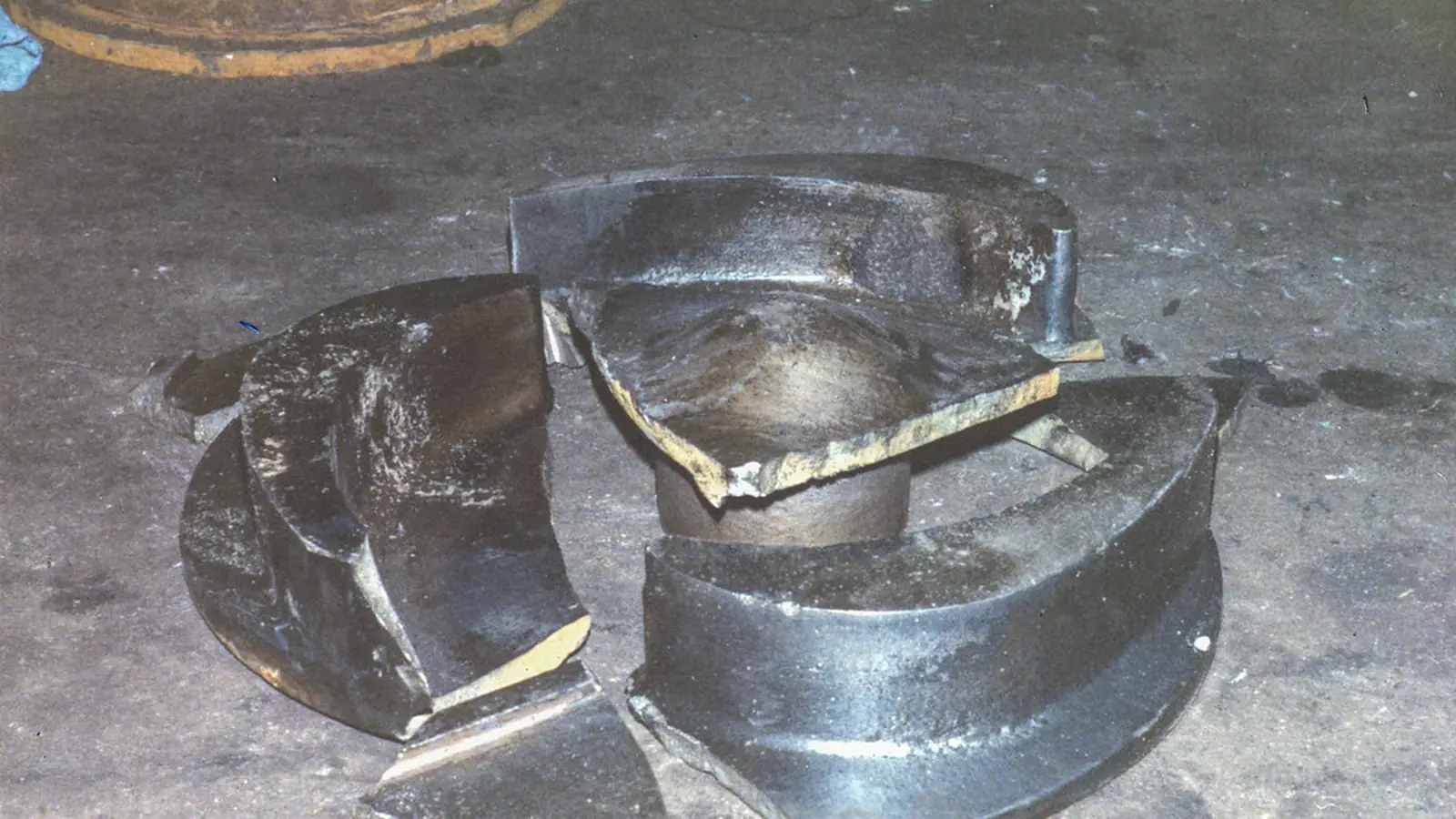
Two honest caveats. First, SiC/SiC is vulnerable to dry running — with no film, the faces can seize and shatter, so dry-run protection matters. Second, heavily loaded or thermal-shock duty can crack even SiC; for slurry and shock service, tungsten carbide is often the safer pair. SiC is the sensible default, not the universal answer.
It is also worth knowing the two main grades: reaction-bonded SiC is the common, cost-effective grade; sintered SiC is denser and harder, used where the duty demands the top end of the material's performance. If you are not sure which grade your duty needs, ask the supplier — the price difference is small compared with a premature failure.
Typical SiC applications read like a pump catalogue: clean water, cooling water, brine, dilute acids and alkalis, most solvents, and light chemical duty. If your media is on that list and free of heavy abrasives, SiC/SiC is usually the right starting point — it is the most stocked pair in the industry, which also means the shortest lead times.
Tungsten Carbide (TC)
Tougher than SiC and better at surviving thermal shock and heavy abrasives. The classic choice for slurry, sewage and abrasive media. Pairs well with carbon faces in heavy-duty service.
Tungsten carbide is tougher than SiC and far better at surviving thermal shock and heavy abrasives — the classic choice for slurry, sewage, mining and other gritty duty. It comes in nickel-bonded and cobalt-bonded grades, and the binder affects corrosion resistance, so the grade must match the media. Confirm the grade with your supplier rather than assuming any TC works for any chemical.
TC pairs well with carbon faces in heavy-duty service: the carbon runs in against the hard TC face and carries the wear, which makes the pair forgiving in the field. TC/TC is used where extreme abrasives would cut a carbon face. The cost is higher than ceramic, and TC is denser and can be more expensive to manufacture in small sizes — but on abrasive duty it outlives the alternatives by enough to pay for itself.
If your pumps handle grit, sludge or scale-forming liquids, TC is usually the right conversation to have with your supplier. If your duty is clean water, TC is probably over-specification — SiC or ceramic will do the same job for less.
On slurry duty, expect the TC face to outlive SiC by a wide margin — often several times — because TC absorbs impact and resists the erosion that chips brittle faces. The trade-off appears at the other end: TC is more vulnerable to certain aggressive chemicals, depending on the binder, which is why the grade question always comes first. If a supplier quotes TC, ask which binder and why.
Ceramic and Carbon
The traditional workhorse pair: ceramic (typically alumina) against carbon. Soft enough to run in well, cheap, and perfectly adequate for clean, low-pressure water duty. Not for abrasives or aggressive chemistry.
The traditional pair — ceramic against carbon — is soft, cheap and perfectly adequate for clean, low-pressure water duty. Carbon is self-lubricating and runs in quickly against the hard ceramic face, which is why the pair has sealed millions of domestic and light industrial pumps.
Know the limits: ceramic is brittle and cracks under thermal shock, and neither material likes abrasives or aggressive chemistry. Where the duty is harder, SiC or TC pairs will outlast it several times over. The ceramic/carbon seal is not a bad seal — it is a seal for a specific, gentle job, and it is very good at that job.
You will meet ceramic/carbon most often on domestic water pumps, HVAC circulators, pool pumps and light industrial water duty — the applications where the duty is gentle and the budget is tight. On those pumps the pair is not a compromise; it is the engineered answer. Problems start only when a ceramic/carbon seal is fitted to a duty it was never meant for, and that is a selection error, not a material failure.
Carbon also appears as a face in its own right in pairs like SiC/carbon and TC/carbon, where it is the wear element — the softer carbon face wears instead of the shaft or the hard face, and it is replaced as part of the seal rebuild. If you see carbon in a specification, it is usually doing exactly that job.
Face Pairing Quick Guide
Clean water, general duty: SiC/SiC or ceramic/carbon. Chemicals: SiC/SiC or SiC/TC with compatible elastomers. Slurry and sewage: SiC/TC or TC/TC. High temperature or thermal shock: TC/carbon. When unsure, send the supplier your media details — material is a compatibility decision.
| Duty | Recommended pair | Why |
|---|---|---|
| Clean water, general duty | SiC/SiC or ceramic/carbon | Low friction, low cost |
| Chemicals, clean | SiC/SiC | Corrosion resistance |
| Slurry, sewage, abrasives | SiC/TC or TC/TC | Toughness and wear resistance |
| High temperature / thermal shock | TC/carbon | Shock resistance |
| Light hydrocarbons, high speed | SiC/carbon or balanced SiC/SiC | Film stability at speed |
When unsure, send the supplier your media and duty details — material is a compatibility decision, and the cheapest way to make it is on paper before the seal is made, not in the pump afterward.
Two pairing logics explain most of the table. Hard/hard pairs — SiC/SiC, TC/TC — run both faces with minimal wear and suit clean, lubricating media. Hard/soft pairs — SiC/carbon, TC/carbon — let the carbon face wear sacrificially and suit duties where the film is marginal, such as hydrocarbons and hot water. Neither logic is better; each fits a family of duties, and the supplier's job is to place your pump in the right family.
Reading Face Wear Patterns
The fastest way to learn face materials is to read the faces of a failed seal. The wear pattern tells you whether the material pair was right for the duty — and whether the failure was the materials or the pump. Look at the faces under good light, and photograph them before cleaning.
| Wear pattern | What it means | Action |
|---|---|---|
| Even, light wear | Normal operation | Seal reached end of life naturally |
| Scored, grooved faces | Abrasives or dirt in the film | Add a flush plan; consider a TC pair |
| Pitted, chipped faces | Cavitation or vapor collapse | Fix suction; check NPSH |
| Heat discoloration, cracks | Dry running or over-compression | Fix operation; check the spring setting |
| Swollen, hardened elastomer | Media incompatibility | Change the elastomer grade |
Match the pattern to the cause before you reorder. If the faces show abrasive scoring, ordering the same material again guarantees the same result — the fix is a tougher pair, a flush plan, or both. If the elastomer is swollen, the face material was never the problem. If you are unsure what a pattern means, send the photo to your supplier; this is a daily question for them.
Material Compatibility Table
A starting map for common media. This is guidance, not a specification: concentrations, temperatures and additives change the answer, so confirm the final material set with your supplier before ordering.
| Media | Face pair (typical) | Elastomer (typical) |
|---|---|---|
| Clean water | SiC/SiC or ceramic/carbon | EPDM or NBR |
| Hot water / condensate | SiC/SiC | EPDM |
| Mineral oils, lubricants | SiC/carbon | NBR or FKM |
| Fuels, solvents | SiC/carbon | FKM |
| Dilute acids and alkalis | SiC/SiC | EPDM or FKM (confirm grade) |
| Strong acids | SiC/TC or SiC/SiC | FKM, FFKM or PTFE |
| Slurry, sewage | SiC/TC or TC/TC | NBR or EPDM |
| Crystallizing media | SiC/SiC with flush plan | FKM or PTFE |
The elastomer is usually the first thing to fail, so give it as much attention as the faces. If the media has changed since the seal was ordered — new additive, new concentration, new temperature — tell your supplier before the next order.
Two details change compatibility answers more than anything else. Concentration: a 5% acid solution and a 50% acid solution are different media to an elastomer, even though both are described as acid. Trace components: a water duty with 100 ppm of an aggressive additive is no longer water to the seal. When you describe the media, include concentration and any additives — the supplier's recommendation is only as good as the description.
Temperature Limits by Face Pair
Temperature acts on faces, elastomers and the fluid film together. Very high temperatures break down elastomers and boil the film at the faces; very low temperatures make elastomers brittle and thicken the media. The table gives typical working ranges for common pairs — the exact limit depends on media, seal design and duty cycle.
| Face pair | Typical working range | Notes |
|---|---|---|
| Ceramic/carbon | -20°C to +120°C | Keep away from thermal shock |
| SiC/SiC | -40°C to +200°C (media-dependent) | Higher with proper design |
| SiC/TC | -40°C to +200°C | Good shock resistance |
| TC/carbon | -40°C to +260°C typical | Metal bellows extends higher |
Above roughly 150-200°C, elastomers become the constraint — many standard elastomers cannot take it, and metal bellows designs replace the dynamic elastomer entirely. Confirm the full temperature envelope, including startup and shutdown transients, with your supplier.
Cold service is the overlooked twin of hot service. Below roughly -20°C many standard elastomers stiffen and lose their seal, and the media may thicken enough to starve the faces of film. If your pump handles chilled liquids or cold-climate startup, ask specifically about the low-temperature limit — it is often the binding constraint even when the nameplate temperature looks mild.
When to Upgrade Face Materials
Upgrading faces is worth considering when a seal fails early from wear, when the media has become more aggressive, when you want longer intervals between overhauls, or when a pump is critical and downtime is expensive. Upgrading is not always the answer — a misdiagnosed pump problem will kill an expensive face pair just as fast as a cheap one.
Practical guidance: upgrade one step at a time and compare real results. Move ceramic/carbon to SiC/SiC on clean water, or SiC/SiC to SiC/TC on abrasive duty, and track seal life per pump before and after. If the new pair does not pay for itself in longer life, the problem was never the material.
Keep the upgrade honest: tell your supplier exactly what failed and what the duty is. A face upgrade without the real data is just a more expensive version of the same guess.
The economics usually favor the upgrade when it is justified: the price difference between a ceramic/carbon and an SiC/SiC seal is typically small relative to one unplanned pump failure — labor, parts and lost production. The discipline is to upgrade for measured reasons, not fashion: track seal life before and after, and let the numbers decide whether the upgrade stays.
Face Material FAQ
Q: Which face material lasts the longest? No single answer — life depends on the duty. SiC/SiC typically outlasts ceramic/carbon several times over on clean water; TC outlasts both on abrasives. Ask your supplier for expected life ranges for your specific media, and treat them as planning numbers, not promises.
Q: Can I mix a SiC face with a carbon face? Yes — SiC/carbon is a common, proven pair, especially for oils and hydrocarbons. The carbon runs in against the SiC and carries the wear. Pairing is a design decision; if you are unsure, send the supplier your duty.
Q: Why does the face material change the price so much? Manufacturing cost. SiC and TC are sintered and ground to a fine flatness, which is expensive; ceramic is simpler to make. You are paying for hardness, corrosion resistance and manufacturing complexity — which is why the material should match the duty, not the budget.
Q: Do I need to change faces if I change media? Often yes. A seal selected for water may fail fast on solvents or abrasives — both the faces and the elastomer need re-checking against the new media. Confirm with your supplier before running it.
Q: Are harder faces always better? No. Hardness helps against abrasives but not against thermal shock or dry running — a brittle hard face can crack where a tougher pair survives. Balance hardness, toughness and corrosion resistance against your actual duty.
Q: How do I know what faces are on my current seal? Check the part number on the gland or sleeve, or the packing slip from the last order — the face pair is usually part of the code. If the code is unreadable, a supplier can often identify the pair from a photo of the faces and the duty. Do not guess before ordering a replacement.
Q: Does the face material affect spare-part availability? Yes. SiC/SiC and ceramic/carbon are the most stocked pairs, which usually means faster delivery; special grades and large sizes are made to order. If you keep spares for critical pumps, order the same pair you currently run and note the lead time in your spares plan.
Q: Can faces be re-lapped and reused? Some carbon faces can be re-lapped by a specialist shop; hard faces like SiC and TC generally cannot be re-lapped back to specification in practice. Rebuilding is a supplier question — send the old seal for assessment. Treat face reuse as the exception, not the standard practice.
Need help matching the right seal? Contact us with your pump model — we confirm the fit before you order.
NEXT STEP
Ready to Upgrade to Mechanical Seal Solutions?
Send us your requirements — our team responds within 24 hours with pricing and lead time.
Written by
Ray ChanMechanical Seal Buyer's Guide Author · Mechanical Seal Solutions Specialist. Ray helps global importers and integrators source factory-direct mechanical seals.